Commonality Analysis
When multiple lots share the same yield-outlier signature, the commonality module identifies what they have in common — same chamber, same slot position, same recipe version, same operator shift — and ranks each candidate by statistical confidence.
Signature matching across the lot population.
The commonality analysis module takes the yield-outlier lot list from the Yield Intelligence Engine and queries the lot traveler history for every outlier lot. It then identifies which attributes — equipment IDs, chamber IDs, slot positions, recipe version numbers, operator shift IDs, maintenance event timestamps — appear more frequently among outlier lots than in the baseline lot population.
The result is a ranked list of candidate root causes. The top candidate is the attribute with the highest chi-square significance score relative to the baseline. The output is a machine-readable evidence package for the yield engineer — not a list of raw data to sort.
The module runs in full in under 60 seconds on a 32-core server when cross-referencing a 200-lot lookback window. It runs incrementally as new lot data arrives, updating the candidate ranking in real time.
| Parameter | Description | Value |
|---|---|---|
| Analysis latency | Full 200-lot commonality pass | < 60 s |
| Attribute dimensions | Simultaneous cross-reference axes | Chamber ID, slot, recipe, shift, PM date, sub-recipe |
| Scoring method | Statistical significance | Chi-square vs baseline population |
| Lookback window | Lot history depth | Configurable, default 72 h |
| Minimum lot count | Outlier set for reliable scoring | 3 lots (below = inconclusive flag) |
| Output format | Evidence package | JSON + dashboard + MES callback |
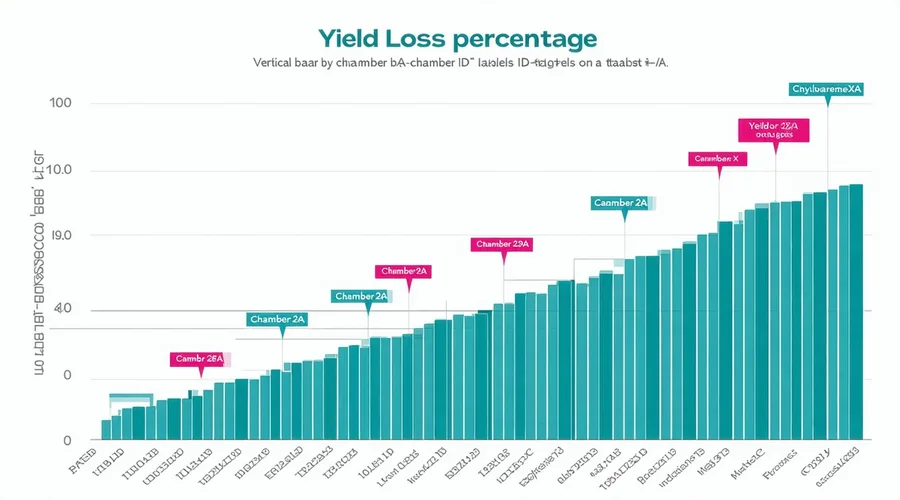
Six attribute dimensions analyzed simultaneously.
Chamber ID
Cross-references every outlier lot's chamber history against the baseline lot population. Statistically significant chamber over-representation generates a chamber attribution candidate with confidence score.
Slot Position
Identifies slot position patterns across multi-wafer batch tools. Consistent slot-specific failure rates indicate chuck, boat, or carrier contamination localized to specific load positions.
Recipe Version
Correlates yield-outlier lot distribution against recipe version history. When a recipe version change coincides with yield degradation onset, the version is flagged as a candidate with a temporal confidence score.
Operator Shift
Scores yield-outlier lot distribution against shift IDs and operator schedule. Shift-correlated yield degradation indicates a handling, load, or setup procedure issue introduced at a specific shift change.
Preventive Maintenance Events
Aligns yield-outlier onset with PM event timestamps. Post-PM yield degradation — a common real-world pattern — is identified when outlier lot start dates cluster after a specific PM event date.
Sub-recipe / Parameter Set
Resolves sub-recipe and parameter set changes that share the same recipe name but differ in embedded parameters. Version-controlled parameter sets are separately tracked as distinct attribute values.
Get a ranked root-cause list, not a data dump.
Bring a recent excursion lot list and we'll show you how the commonality module would have attributed it — in the time it takes for a shift handoff meeting.